Where Do Candiac Locals Actually Gather? A Neighbourhood Guide

Isn't Candiac Just a Bedroom Community?
Most outsiders think they know what Candiac is about—nice houses, tree-lined streets, and a quick commute to Montreal. They see the highway signs and assume we're just another suburb where people sleep between workdays. But that's not the life we actually live here.
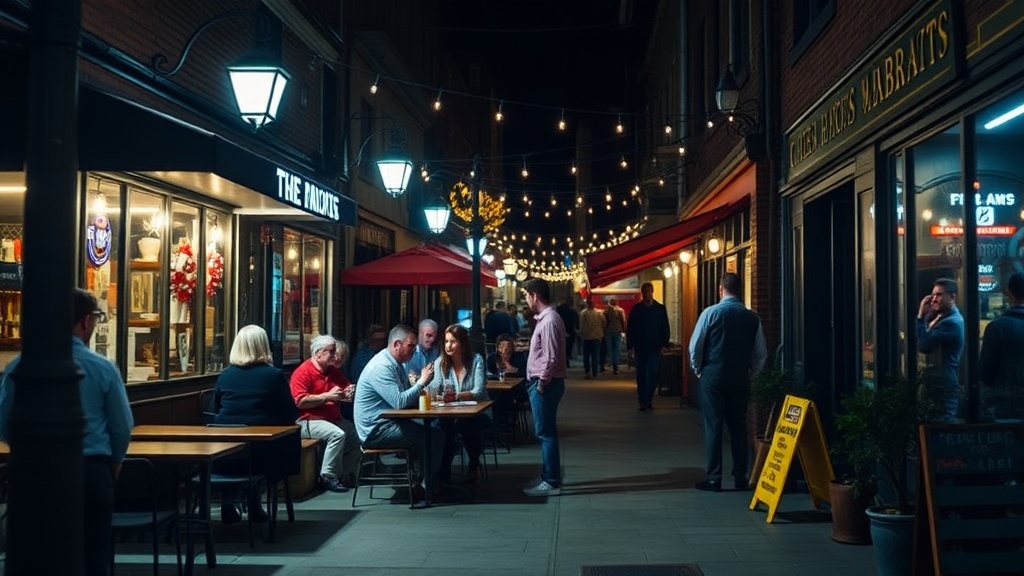
Candiac has a pulse. It's found in the community centres where neighbours bump into each other, the parks where families build traditions, and the local spots where staff remember your order. This isn't a generic suburb—it's a collection of distinct neighbourhoods each with their own gathering places and rhythms. If you're new to Candiac or you've been here for years without venturing beyond your own street, here's where our community actually comes together.
What's the Real Heart of Candiac's Community Life?
The Complexe Roméo-V.-Patenaude sits at 59 Chemin Haendel—and if you haven't spent time here, you're missing the city's social engine. This isn't just a building with a funny name. Since 2005, it's housed our Bibliothèque de Candiac, where you'll find seniors reading newspapers in the morning, students cramming for exams in the afternoon, and parents with toddlers at story time on weekends.
Walk through the doors on any given evening and you'll catch the buzz of community meetings, art classes, and local club gatherings. The Complexe underwent significant renovations in 2005 and continues to serve as the backdrop for everything from municipal consultations to neighbourhood association meetups. Karine Lehoux and her team at the Department of Ecological Transition regularly host events here, bringing residents together around the city's sustainability initiatives. If you want to understand what Candiac cares about—green spaces, energy efficiency, intergenerational connection—this is where those conversations happen.
Just down the road on Boulevard Montcalm, the commercial strip between Avenue d'Inverness and Chemin Haendel offers a different kind of gathering space. This is where you'll run into neighbours at the IGA Candiac or grab a quick lunch at Sasa Sushi. The Uniprix and Metro aren't just stores—they're informal meeting points where you'll exchange updates about road construction on Autoroute 15 or debate which park has the best summer programming.
Where Should You Go to Experience Candiac's Outdoor Culture?
Our urban forest isn't just marketing copy—it's 17,000 trees woven through every neighbourhood, and locals treat these green spaces as extensions of their backyards. Parc Montcalm remains the crown jewel, sprawling across the northern end of the city with enough space that you can always find a quiet corner even when the soccer fields are busy. On summer evenings, the walking paths fill with joggers, dog walkers, and parents pushing strollers. It's not uncommon to see the same faces week after week, building those casual friendships that define small-community living.
Parc de la Cité—also known as Parc Champlain—serves the Quartier Champlain with a different energy. This is where young families cluster, where the playground equipment gets heavy use on Saturday mornings, and where impromptu picnics happen when the weather cooperates. The park sits within one of Candiac's older residential pockets, and there's a sense of rootedness here that newer developments are still working to establish.
For something more tucked away, Parc Fernand-Séguin offers a quieter experience. Located near Domaine-de-Candiac, this park doesn't draw the same crowds as Montcalm—which is precisely why some residents prefer it. Bring a book, find a bench, and you'll likely have the space to yourself. The city's commitment to maintaining these green corridors (they've invested significantly in park infrastructure as part of their sustainable development guide) means that even smaller parks like Parc Deauville and Parc du Centenaire remain well-kept and welcoming.
How Has the Train Station Changed Where We Gather?
The Candiac train station isn't just transit infrastructure—it's reshaped how our community functions. When the TOD (Transit-Oriented Development) project launched around the station, it brought new density and new gathering spaces to a city that was historically more spread out. The central square alone spans 10,000 square metres, creating a public space that didn't exist in this form a decade ago.
Commuters who catch the EXO train to downtown Montreal have built their own micro-community around the morning and evening rush. There's an unspoken etiquette—regulars know where to stand on the platform, which seats face forward, and who prefers the quiet car. The park-and-ride station has become a secondary hub, with locals timing their grocery runs at nearby shops around their train schedules.
The TOD development also brought the Promenade de la Sorbonne, a linear park that connects residential areas to the station. This isn't just a walking path—it's become a route for evening strolls, a safe corridor for cyclists, and a green thread that ties together the neighbourhoods between Boulevard Montcalm and the tracks. The city's vision of "active transportation" isn't abstract here; you can see it in practice on any weekday morning.
What About the Lesser-Known Local Spots?
Beyond the parks and community centres, Candiac's social fabric is held together by small businesses that function as informal gathering places. Adom, the specialty shop near Parc Montcalm, draws a loyal following for gifts and home goods. La Pause on Boulevard Montcalm offers yoga and massage therapy—a wellness hub where practitioners know their clients by name and health goals.
Crèmerie Gialla at the corner of Boulevard Montcalm and Boulevard Marie-Victorin serves ice cream that locals will line up for on hot summer evenings. It's the kind of place where kids grow up coming after soccer practice, where teenagers hang out on weekend nights, and where parents run into every other parent they know. The intersection itself—Montcalm and Marie-Victorin—functions as an unofficial town centre, anchored by the CLSC Candiac and the clustering of dental offices, the Canada Post, and small retailers.
For a quieter social experience, the Centre Claude-Hébert (the newer library location) offers a more contemporary space than the Roméo-V.-Patenaude complex. It's worth visiting both to see how Candiac balances its history with its growth—the older building carries the weight of community memory, while the newer space accommodates a growing population with updated facilities.
The city's commitment to sustainable development—being the first municipality in Quebec to adopt a comprehensive sustainable neighbourhood guide in 2016—shows up in these gathering spaces. Solar panels on municipal buildings, well-maintained walking paths, and the preservation of green corridors aren't just policy achievements. They're the infrastructure that makes community life possible here. When you walk through the Domaine-Notre-Dame neighbourhood or follow the trails connecting Parc-Champlain to residential streets, you're experiencing the physical expression of what Candiac values.
We live in a city that's often misunderstood as just another suburban development. But spend a week visiting these gathering spots—the Complexe Roméo-V.-Patenaude at Haendel, the benches at Parc Montcalm, the platform at the train station—and you'll see something different. Candiac is a community of people who show up, who use their public spaces, who build routines that intersect with their neighbours' lives. That's not suburbia. That's just home.