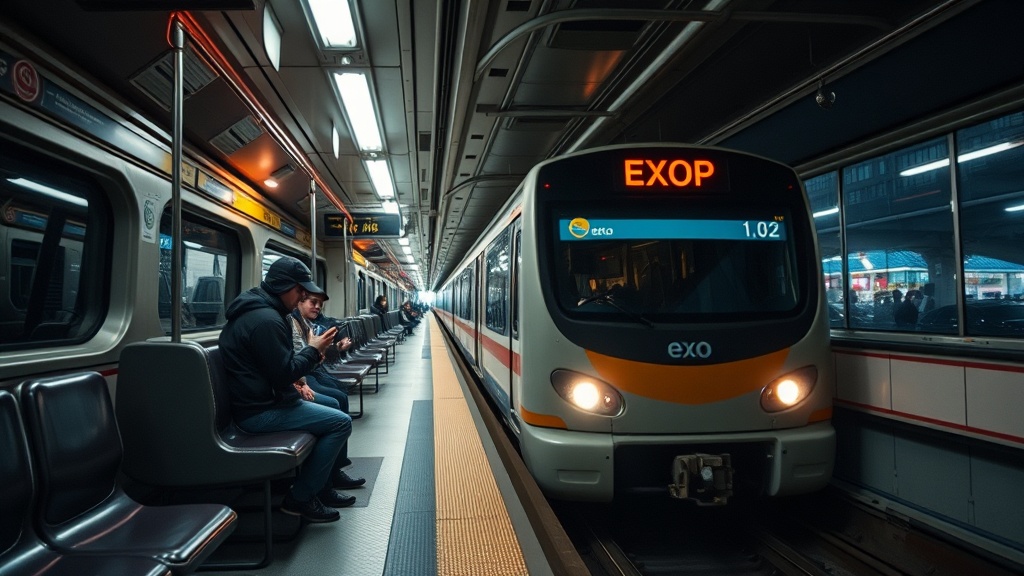
How to Take the EXO Train from Candiac to Montreal: A Complete Guide

What does the EXO train from Candiac to Montreal offer commuters?
This guide covers everything needed to ride the EXO Candiac line—schedules, fares, station locations, and insider tips for avoiding common headaches. Whether commuting daily for work or heading into the city for a weekend event, understanding how this train works saves time and money. The Candiac line connects the South Shore suburbs directly to Montreal's downtown Central Station in about 35 to 50 minutes, bypassing traffic on the Champlain Bridge entirely. That's the pitch—here's how it actually works.
How much does the EXO train from Candiac cost?
A single ride on the Candiac line costs $4.50 with an OPUS card or $6.50 when paying cash on board. Monthly passes run $172 for unlimited travel between Candiac and Montreal—significantly cheaper than downtown parking, which easily hits $25 to $40 per day.
The fare structure follows EXO's zone system. Candiac sits in Zone C, while downtown Montreal is Zone A. Traveling between these zones requires an ABC pass, which covers the full distance. Students, seniors 65 and over, and children 6 to 17 qualify for reduced fares—roughly half the regular adult price.
Here's the thing: cash fares are exact change only. The train conductors don't make change, and they don't accept credit cards on board. Loading an OPUS card online or at any station vending machine avoids this hassle entirely. The card itself costs $6, but it pays for itself quickly through lower per-ride rates.
Worth noting: transfers between EXO trains, buses, and the Montreal Metro are included when using an OPUS card. Tap within two hours of the first validation and you won't pay twice. That said, paper tickets don't offer this benefit—another reason to grab the card.
Where does the Candiac train stop and how often does it run?
The Candiac line runs five stations from south to north: Candiac, Delson, Saint-Constant, Sainte-Catherine, and Montreal Central Station. Trains operate Monday through Friday with limited weekend service during summer months and special events.
Weekday rush hour sees trains every 20 to 30 minutes during morning and evening peaks. Midday service drops to roughly every hour. The first departure from Candiac station leaves at 5:40 AM, arriving at Central Station by 6:20 AM. The last evening train departs Montreal at 12:15 AM, reaching Candiac just before 1:00 AM.
The catch? Off-peak and weekend schedules are sparse. If a meeting runs late or plans change, you might wait 60 to 90 minutes for the next train. Always check the live schedule before heading to the station—delays happen, especially during Quebec winters.
Each station offers different amenities. Here's what to expect:
| Station | Parking | Bike Racks | Connecting Bus Routes |
|---|---|---|---|
| Candiac | 300+ spaces, free | Yes | RTL 125, 611 |
| Delson | 200+ spaces, free | Yes | RTL 32, 38 |
| Saint-Constant | 400+ spaces, free | Yes | RTL 30, 31, 32 |
| Sainte-Catherine | 150 spaces, free | Limited | RTL 6, 14, 30 |
| Montreal Central Station | Paid nearby lots | BIXI station outside | Metro Orange/Green lines, STM buses, REM |
What's the best way to get to Candiac station?
Most riders drive and park. The Candiac station lot fills fast by 7:30 AM on weekdays—arrive earlier or risk circling. The lot is free (a rarity for commuter rail), but unmaintained in winter. Snow clearing happens, eventually. Don't expect immediate results after a storm.
The RTL (Réseau de transport de Longueuil) runs connecting buses to all four South Shore stations. Route 125 serves Candiac station directly from the Champlain Mall area. Route 32 connects Delson and Saint-Constant stations to residential neighborhoods and industrial zones. These buses coordinate with train schedules, though delays on either end can break that connection.
Cycling? Each station has bike racks, though coverage varies. Saint-Constant has the most secure setup—covered racks with camera surveillance. Sainte-Catherine offers basic uncovered hoops. Theft happens, so bring a solid lock (or two). That said, the ride to Candiac station involves sharing roads with busy traffic on Montée Saint-François-Xavier—not the most relaxing approach.
How does the Candiac train compare to driving or taking the REM?
Driving to downtown Montreal from Candiac takes 25 minutes without traffic. The catch? There's always traffic. Morning rush hour stretches that to 45 to 75 minutes, depending on bridge conditions. The new Samuel De Champlain Bridge improved things, but bottlenecks remain at the Turcot Interchange and downtown exits. Parking downtown adds $20 to $40 daily, plus gas and wear on the vehicle.
The REM (Réseau express métropolitain) opened in 2023 and changed the calculus slightly. This automated light metro connects Brossard to downtown in 20 minutes—faster than the Candiac train. However, Brossard is 15 to 20 minutes east of Candiac by car. For residents near Delson or Saint-Constant, the REM requires backtracking east before heading west to Montreal.
Here's the breakdown:
| Option | Travel Time | Cost (One Way) | Best For |
|---|---|---|---|
| EXO Candiac Train | 35-50 min | $4.50 (OPUS) | Downtown destinations, avoiding driving stress |
| Drive + Park | 25-75 min | $25-40 parking + gas | Flexible schedules, destinations off transit routes |
| REM from Brossard | 35-45 min total* | $4.50 (OPUS) | Central station area, frequent service (every 5-10 min) |
| RTL Bus to Metro | 60-90 min | $4.50 (OPUS) | Budget travel, no rush |
*Includes driving to Brossard station
The REM runs more frequently—every 5 to 10 minutes versus the Candiac train's 20 to 60 minute gaps. That flexibility matters when meetings run late or plans shift. That said, the Candiac train drops you at Central Station, connected to the Metro Orange and Green lines, while the REM terminates at Gare Centrale—adjacent but requiring a short walk through the underground city to reach the same Metro lines.
What should you know before your first ride?
Buy the OPUS card before boarding. Vending machines at each station accept debit and credit, though they occasionally malfunction (especially in cold weather). The EXO mobile app shows real-time schedules and service alerts—download it.
Validate the ticket before the train arrives. Yellow validators on the platform or inside the station scan OPUS cards. Fare inspectors board randomly and issue $150+ fines for non-validation. Ignorance isn't a defense.
The trains are double-decker Bombardier cars—comfortable enough, though showing age. Upper deck seats fill first for the views (mostly of highways and industrial zones, but still). During peak hours, expect standing room only between Saint-Constant and Montreal. Off-peak, you'll have a car to yourself.
Winter brings delays. Snow, ice, and equipment issues hit the Candiac line harder than the Metro. The EXO Twitter account posts updates, though not always promptly. Buffer extra time for important appointments from December through March.
Worth noting: food and drink are technically allowed, but frowned upon during crowded periods. Coffee spills create hazards on moving trains. Eating a full lunch? Wait until you're seated and the train's underway.
The ride itself follows the St. Lawrence River northbound, crossing the Lachine Canal and pulling into Central Station underground. From there, the Bonaventure Metro, the Underground City, and downtown Montreal unfold in all directions. The journey ends—but getting there, at least, didn't involve staring at brake lights on the Champlain Bridge.
Steps
- 1
Plan Your Trip Using the EXO Mobile App or Website
- 2
Purchase Your Ticket or Load Your OPUS Card
- 3
Park at the Station and Board the Train