Candiac Under the Trees: Shade, Streets, and Smarter Planting
This post explains why Candiac's urban forest matters in everyday life, where residents can notice its value, and how to make better planting choices at home. Trees are not just background scenery here — they affect summer comfort, street character, walking routes, stormwater, property decisions, and the way neighbourhoods age.
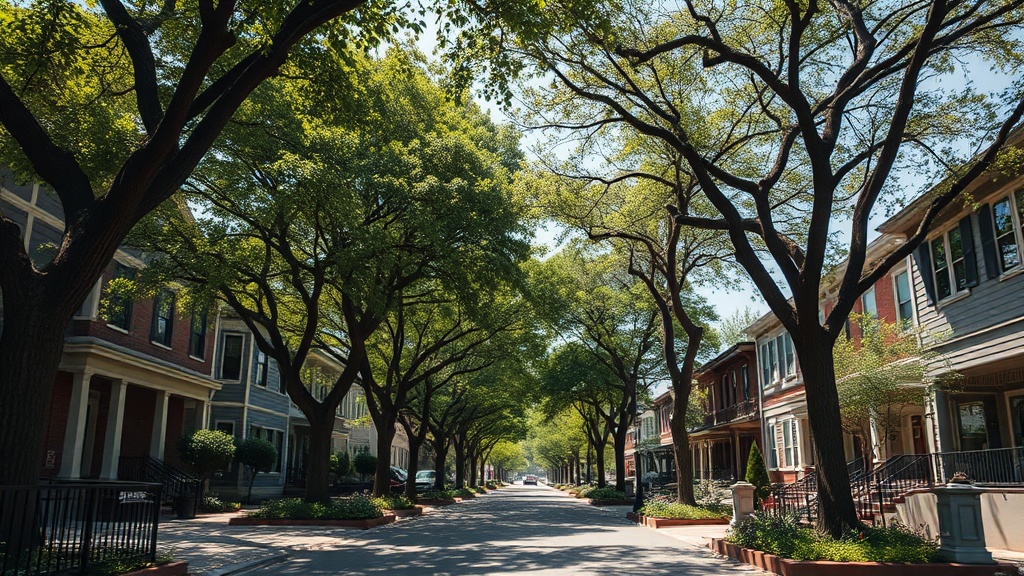
Candiac has built a recognizable identity around being a city under trees. That can sound like branding until you spend a hot afternoon moving through town on foot, by bike, or from a parked car to a storefront. Shade changes the mood of a street. It slows people down in a good way. It makes a sidewalk feel usable instead of punishing. It also protects public investment: streets, parks, school approaches, and civic spaces all work better when the canopy is planned and cared for.
Why does Candiac care so much about trees?
The short answer is that trees do several jobs at once. The longer answer is more interesting. Candiac's official tree page notes that about 17,000 trees are spread through public rights-of-way and parks, and the city ties that work to the phrase Ma ville sous les arbres. You can read the city's overview at Candiac.ca/arbres. That number matters because a public tree is not a decorative object placed once and forgotten. It has to be inventoried, inspected, pruned, protected, replaced when needed, and matched to the space around it.
That kind of care is not glamorous municipal work, but it is the work people notice when it is missing. A street with weak canopy feels exposed. A newer block without mature shade can feel unfinished for years. A commercial area with only asphalt and small ornamental plantings feels hotter, louder, and less pleasant than it should. In Candiac, where many residents move between quiet residential streets, schools, parks, and highway-connected shopping areas, the canopy helps keep the city from feeling like disconnected pieces.
There is also a civic signal in the choice of the bur oak as the emblematic tree. A bur oak is not quick or flashy. It suggests patience, strength, and a long time horizon. That is the right mindset for urban forestry. A tree planted today is a gift to people who may not thank you because they will assume the shade was always there.
Where can you feel the tree canopy on a normal day?
The best way to understand Candiac's trees is to stop thinking of them only as park features. Notice them in ordinary places: the edge of a sidewalk, the approach to a school, the strip between a driveway and the road, the shade beside a bench, the transition from a wide road to a calmer residential street. The canopy often works hardest in these plain spots.
On a July afternoon, even a short walk can feel different from one block to the next. A street with regular shade gives pedestrians a reason to keep moving. Parents pushing strollers can pause without feeling trapped in direct sun. Older residents can take a slower route without every stretch becoming a heat test. Cyclists also benefit, even when they are only under trees for short sections, because repeated breaks from direct sun add up.
Tree cover also changes how people read a neighbourhood. Mature trees soften the scale of houses and roads. They make front yards feel connected instead of isolated. They frame views and hide some of the visual clutter that every suburb collects over time — utility boxes, parked vehicles, bins waiting for collection, snow markers, temporary signs. Bad pruning, poor species choice, compacted soil, and conflicts with wires can still make a tree look stressed. When Candiac gets the canopy right, though, the whole street feels more settled.
How should homeowners choose a tree without regretting it later?
The most common mistake is choosing a tree for how it looks at the garden centre rather than how it will behave in 15 or 30 years. A small tree in a pot is easy to love. A mature tree pressing into a roofline, shading the wrong part of a yard, lifting a walkway, or growing toward distribution wires is a different story.
Before planting, look up, down, and outward. Overhead wires matter. Underground services matter. So do the driveway, the neighbour's fence, the pool, the shed, the snow pile area, the front steps, and the future width of the canopy. Hydro-Québec gives plain advice on this point: pick the right tree for the right place and consider mature size before planting near power lines or structures. Their guidance is worth checking before anyone digs: The right tree in the right place.
Soil is just as important as the species label. A tree planted in compacted soil beside a driveway may struggle even if it is technically suitable for the region. Salt spray can punish some trees near roads. Poor drainage can weaken others. A windy corner lot has different needs than a sheltered backyard. The best choice is not always the biggest tree you can fit. Sometimes a smaller species, placed well and allowed to grow naturally, gives more beauty and fewer maintenance headaches than an ambitious planting squeezed into a tight spot.
| Decision | Better local habit |
|---|---|
| Planting near wires | Check mature height and safe distance first. |
| Planting near pavement | Leave room for roots, snow clearing, and door swing. |
| Choosing for fast growth | Balance speed with strength, shape, and lifespan. |
| Watering a new tree | Water deeply and less often, especially in dry spells. |
How does shade change walking, cycling, and waiting around town?
Candiac talks often about active and sustainable mobility, and tree cover should be treated as part of that conversation. A path is more useful when people can bear to use it in warm weather. A bus stop or train-station walk feels different when the approach includes shade. A school route is more inviting when children and parents are not exposed the whole way.
This is where urban forestry becomes practical, not sentimental. Paint on pavement can mark a route. Signs can guide people. But shade is what makes many short trips feel reasonable in summer. If a resident is choosing between a five-minute drive and a ten-minute walk under punishing sun, the car wins more often than planners want to admit. Put that same walk under intermittent canopy, with a comfortable place to pause, and the choice changes.
What should residents remember during heat waves?
Shade helps, but it is not a full heat-safety plan. Health Canada warns that extreme heat can create real health risks, especially for older adults, infants, young children, people with chronic illness, and anyone working or exercising in the heat. Their current preparedness page is here: Extreme heat.
For Candiac residents, the practical point is simple: use shade early, not only after you feel overheated. Plan errands and walks for cooler parts of the day. Carry water. Slow down. Check on neighbours who may not ask for help. If your home gets too hot, find an air-conditioned public or commercial space before the heat has already worn you down. A tree-lined street can make the trip easier, but it cannot replace cooling, hydration, and common sense.
Homeowners can also think about shade as part of home comfort. A well-placed deciduous tree can reduce harsh sun on a wall, patio, or window during summer while allowing more light after leaves fall. That benefit takes time, which is why planting decisions should not be put off forever. The best shade tree for your future self is the one that gets planted in the right spot soon enough to matter.
What can you do this season?
Start with observation. Walk your block and notice where shade is missing, where trees are struggling, and where a single mature canopy improves the whole street. If you own property, sketch the spaces where a tree could grow without fighting wires, buildings, snow storage, or underground services. If you already have trees, check for broken branches, trunk wounds, mulch piled against bark, and soil that dries out too quickly.
Young trees need boring, consistent care. Water them during dry periods. Keep mulch in a wide, shallow ring, not stacked against the trunk. Protect bark from mower and trimmer damage. Do not prune aggressively just because a branch looks inconvenient. If a tree is large, near wires, or structurally questionable, bring in qualified help rather than treating it like a weekend chore.
For public trees, use the city as the point of reference. Candiac's urban forest is a shared asset, and shared assets need reporting, patience, and maintenance budgets. A damaged public tree is not just someone else's problem; it is part of the canopy residents rely on every time they choose to walk, bike, sit outside, or enjoy a calmer street. The next time you take the shaded side of the road without thinking, that is the urban forest doing its work.